

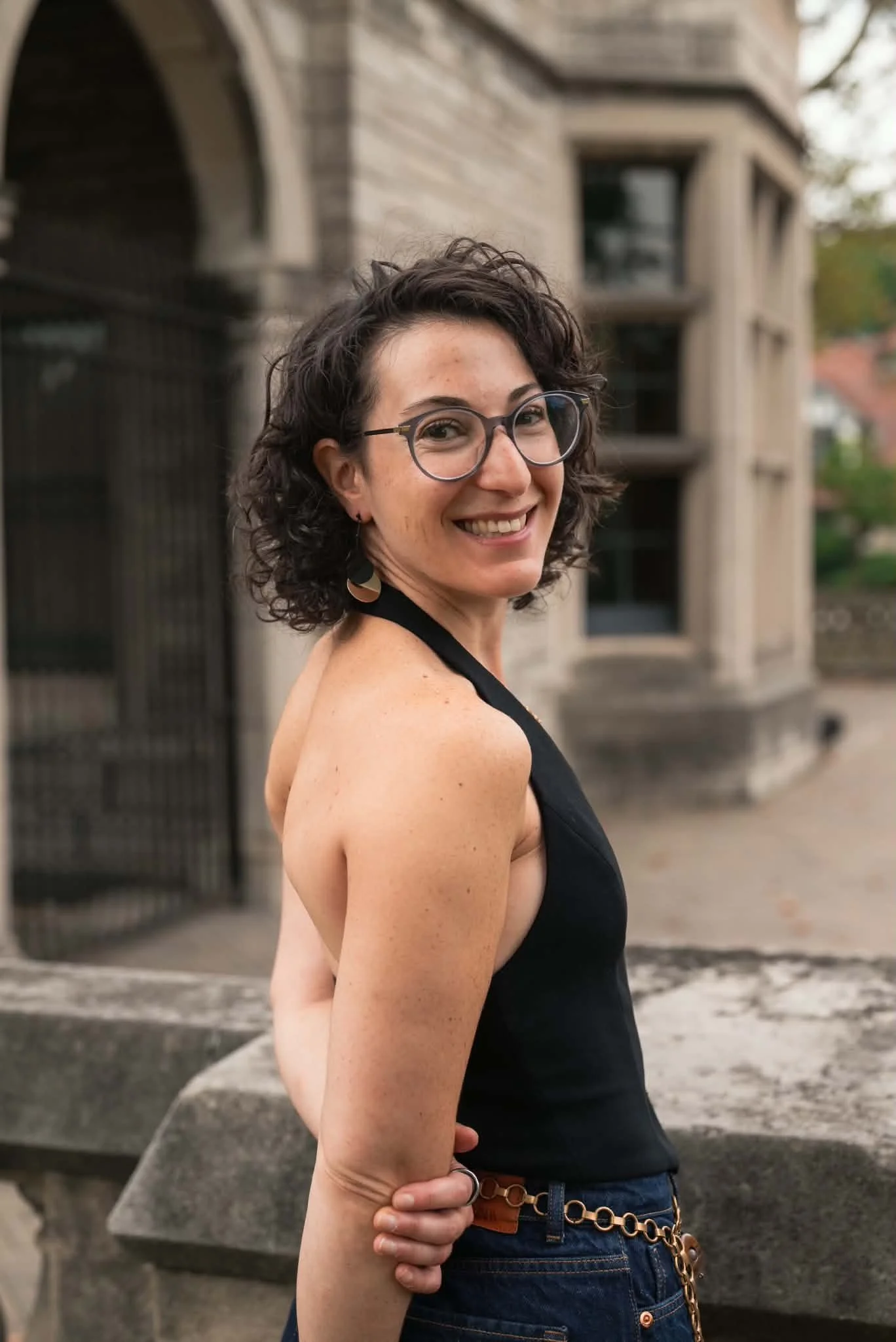
Hi, I’m Lauren
This work became personal long before it became my profession.
My relationship with women's health began in my twenties, when, in 2015 at 26 years old, I was diagnosed with breast cancer and had one of my ovaries removed. Overnight, I was navigating a hormonal landscape most women wouldn't encounter until decades later — and it changed the way I thought about health.
I became deeply curious about what was happening inside my body and how much influence we actually have over the way we feel. I went to the Institute of Holistic Nutrition in Mississauga and continued my education with specialized training in hormone health and emotional eating. Over the past decade, I've worked with women from around the world, initially supporting women through breast cancer prevention and recovery before my work naturally expanded into perimenopause and whole-person wellbeing.
Learning to understand my body
For years, I knew something wasn't right, but I didn't always have the language to explain it.
As I moved deeper into perimenopause, I experienced anxiety, depression, disrupted sleep, low motivation, low libido and painful sex, and profound brain fog — this was the most debilitating symptom for me because it made me feel like I was disappearing.
I couldn't think the way I used to. Focusing was difficult. Being present was difficult. I struggled to find words — and as someone who channels when she speaks, I felt completely disconnected from who I am and what I love about myself.
That experience taught me something I now see over and over again in the women I work with: when you don't understand what's happening in your body, it's incredibly easy to start believing that something is wrong with who you are.
Sometimes what you need isn't more discipline, more willpower, or another thing to optimize. Sometimes you need someone to help you understand what's actually happening and identify practical changes that can make a meaningful difference in your life.
Eventually, hormone therapy became part of my care, and it made a profound difference in how I felt. It also deepened my understanding of something I believe is important for women to hear: HRT can be an incredibly valuable tool, but it isn't the whole picture.
When hormones shift, they can change the entire terrain — affecting sleep, stress, metabolism, digestion, mood, energy, muscle, brain health, and so much more. And understanding how that terrain changes is an important part of learning how to support yourself through perimenopause.
I see women all the time trying to do the things that worked for them in their 20s and 30s — eating the same way, exercising the same way, pushing through stress the same way — and wondering why their bodies are suddenly responding differently. The answer isn't that they've lost their discipline or that their bodies are failing them. The terrain has changed, and the approach needs to change with it.
Replacing hormones may address an important piece of that picture, but there is still a body and a life to support. Nutrition, movement, sleep, stress regulation, relationships, nervous system health, and our relationship with our bodies all matter.
For me, the most powerful approach has been learning to understand the whole picture rather than searching for one thing that will fix everything.
Reconnecting with your body
Earlier in my career, much of my work involved supporting women through breast cancer prevention and recovery. A huge part of that work wasn't simply about nutrition or reducing risk.
It was about reconnecting with your body after your body has become something you feel you have to fight, monitor, or control.
We talked about desire. Pleasure. Sensation. Sexuality. Body image. What happens when your body changes. How to inhabit a body that may look or feel different than it once did. How to accept where you are while still wanting something to change.
Those conversations shaped the way I see health today.
I don't believe you have to love every part of your body exactly as it is. You can want to feel stronger, lose weight, change your symptoms, improve your health, or experience something different — while also learning to respect and care for the body you have right now.
You are allowed to want change without making yourself wrong for where you are.
That philosophy sits at the heart of my work.
Where my work is today:
Today, my work is focused on helping women navigate the physical, mental, and emotional shifts of midlife with more understanding, confidence, and support.
I bring together my background in holistic nutrition and hormone health with education around perimenopause, movement, sleep, stress, nervous system health, and the relationship we have with our bodies. Rather than focusing on one symptom or searching for a single solution, I look at the whole picture — because how you feel is influenced by far more than your hormones alone.
My goal is to help women understand what is happening, remind them how much agency they have, and implement meaningful changes that support the life they actually want to live.
Ways to work with me
Midlife Health Review
A personalized, in-depth session where we look at your symptoms, nutrition, movement, sleep, stress, hormones, daily routines, and lifestyle to connect the dots and create a practical plan for moving forward.
Group Programs — Coming Soon
Small-group educational, somatic, and embodiment experiences designed to help women better understand their bodies, navigate perimenopause, and make meaningful changes alongside other women going through the same transition.
Workplace & Corporate Wellness
I bring practical, evidence-informed perimenopause and midlife health education into the workplace through in-person and virtual workshops, lunch & learns, and digital courses designed to give employees the knowledge and tools they need to feel supported at work and beyond.
A few things you might not know about me
I'm a trauma-informed breathwork facilitator, ecstatic dance DJ, and retreat leader. I love creating experiences that bring people out of their heads and into greater connection with their bodies, other people, and themselves.
I believe health and wellbeing can be educational and evidence-informed while still being playful, experiential, and full of good energy. Some of my favourite work happens when women are learning something new, laughing together, moving their bodies, and remembering that taking care of yourself doesn't have to feel like another item on your to-do list.